
Seeds of Power

Winner: Allan Schnaiberg Outstanding Publication Award, American Sociological Association (Environmental Sociology Section)

Winner: Global Development Studies Book Award, International Studies Association

Honorable Mention: Best Book Award, Latin American Studies Association (Environment Section)
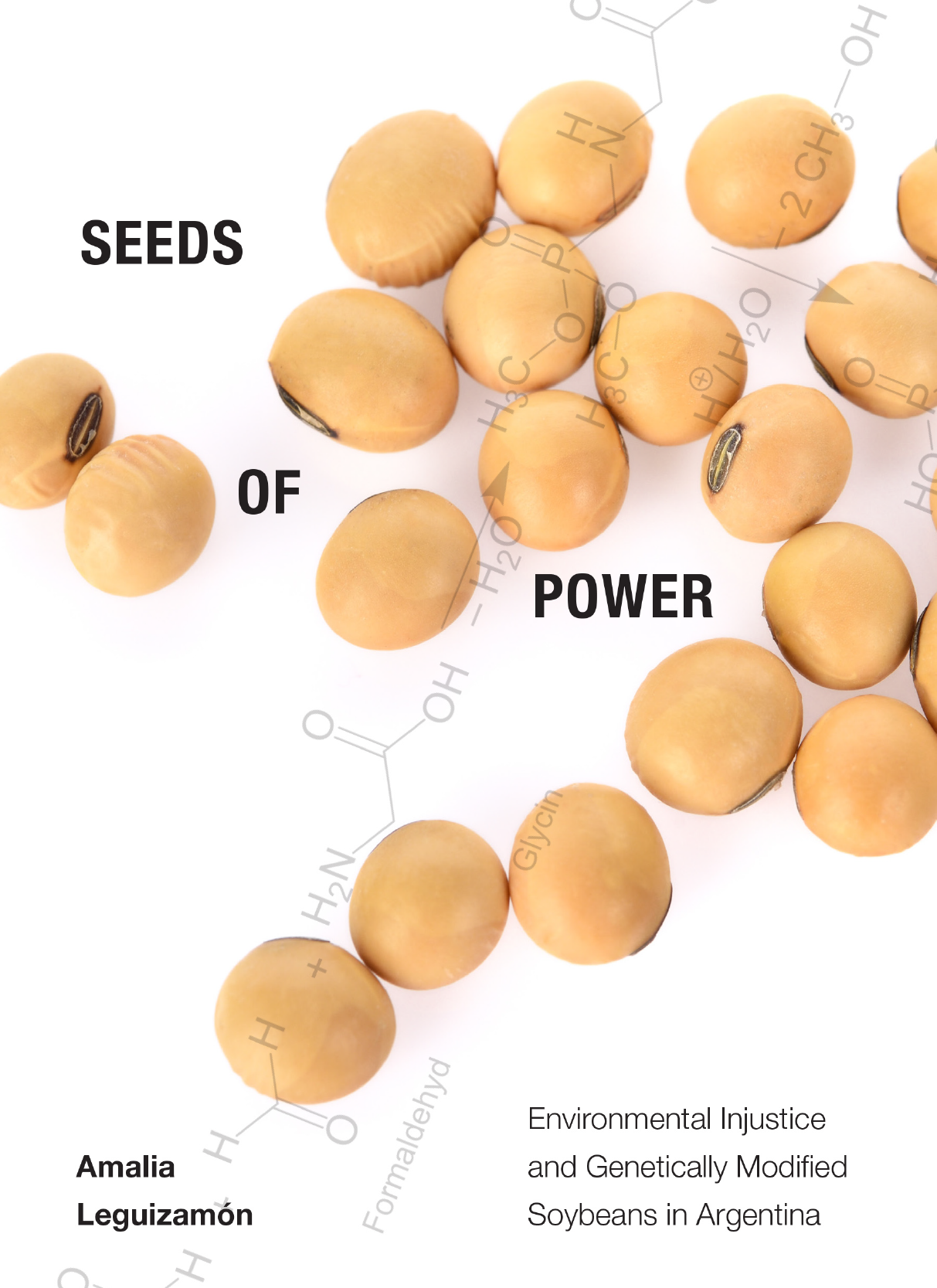
Seeds of Power: Environmental Injustice and Genetically Modified Soybeans in Argentina (Duke University Press, 2020)

In 1996 Argentina adopted genetically modified (GM) soybeans as a central part of its national development strategy. Today, Argentina is the third largest global grower and exporter of GM crops. Its soybeans—which have been modified to tolerate spraying with herbicides—now cover half of the country’s arable land and represent a third of its total exports. While soy has brought about modernization and economic growth, it has also created tremendous social and ecological harm: rural displacement, land concentration, food insecurity, deforestation, violence, and the negative health effects of toxic agrochemical exposure.

In Seeds of Power Amalia Leguizamón explores why Argentines largely support GM soy despite the widespread damage it creates. She reveals how the state, agribusiness, and their allies in the media and sciences deploy narratives of economic redistribution, scientific expertise, and national identity as a way to create compliance among the country’s most vulnerable rural residents. In this way, Leguizamón demonstrates that GM soy operates as a tool of power to obtain consent, legitimate injustice, and quell potential dissent in the face of environmental and social violence.
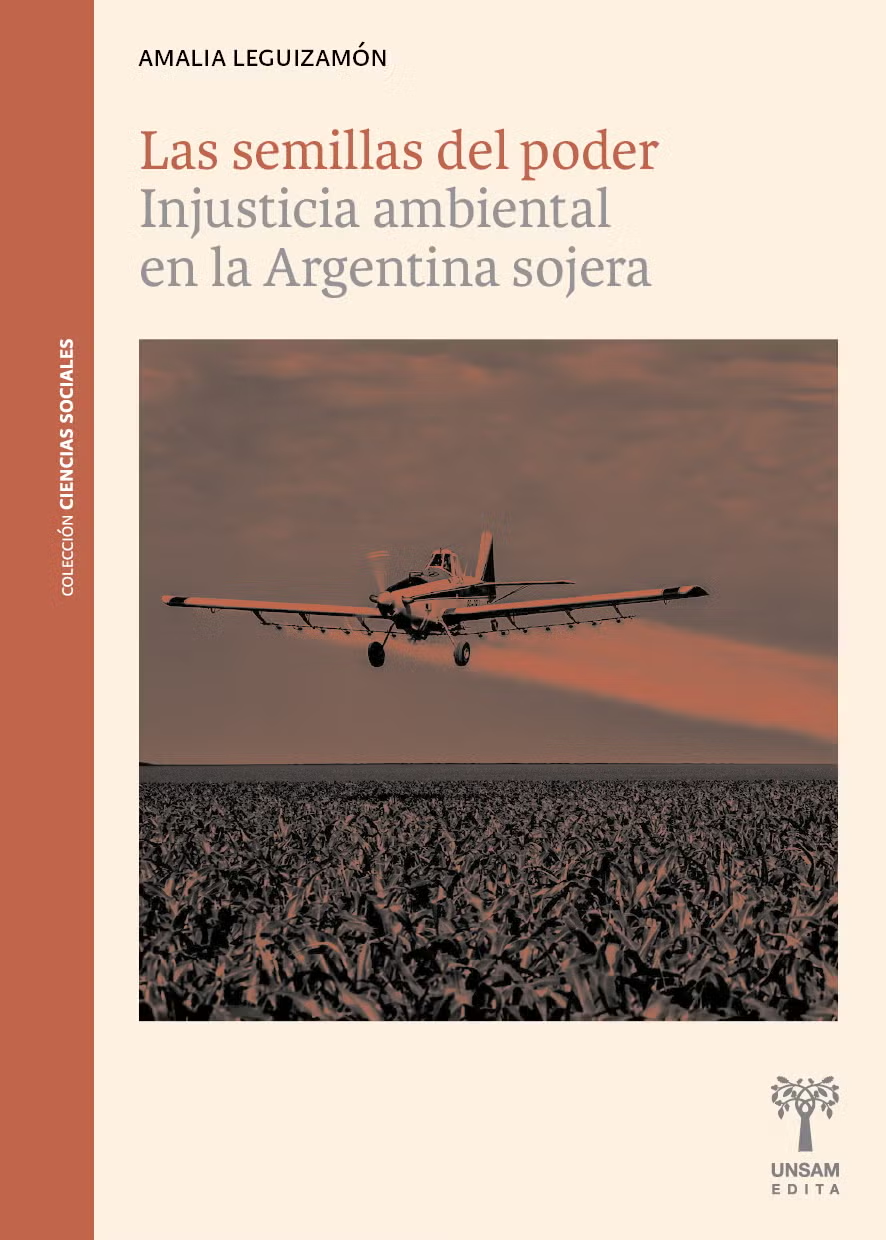
Seeds of Power breaks new ground . . . by revealing the intersection of class, gender, race/ethnicity, and rural/urban inequalities in the political economy and political culture that renders the environmental injustice associated with soybean expansion in Argentina invisible. . . . Books like this [are] not only necessary but urgent.”

— Renata Motta, American Journal of Sociology

“Clearly written and superbly argued, this fabulous book manages to accomplish that quite difficult task of engaging readers interested in the specificities of the case and those interested in larger theoretical issues. Seeds of Power is so well written that it puts readers in the different scenes, making us think about the invisible workings of power and about the ways in which we can go about detecting the daily production of political domination.”

— Javier Auyero, coauthor of Flammable: Environmental Suffering in an Argentine Shantytown

“Beautifully written, nuanced, complex, yet easy to read… Seeds of Power is not only key to understanding agrarian development in Argentina today, it is also a pleasure to read.”

— Zoe Brent, Journal of Agrarian Change

“In her excellent book, Seeds of Power, Amalia Leguizamón has focused on less-studied social groups as well as subaltern rural peoples…. Hers is a rare academic book that is accessible yet theoretically sophisticated.”

— Mario L. Cardozo, Journal of Latin American Geography

“Leguizamón presents a thoughtful, well-argued, and clearly presented book grounded in the intersection of culture, economics, and history that is fitting for both academic and non-academic audiences.”

— Stephen J. Scanlan, Social Forces

“A robust and important representation of the very best ethnographic work… In this fabulously readable book, Leguizamón reveals the complex workings of power that pervade the world of transnational corporate agriculture.”

— Lauren E. Eastwood, Journal of Global South Studies

“… not only does this book make a singular contribution to environmental sociology that opens the door to new and important avenues for environmental justice scholars, but there is also much of value here for those interested in the political economy of the world-system, social movements, global and transnational sociology, and critical food studies.”

— 2022 Allan Schnaiberg Outstanding Publication Award citation, Environmental Sociology Section, American Sociological Association

Seeds of Power “offers an exceptional mix of scholarship and storytelling and deserves to be widely read by everyone who wants to better understand how the global GMO debate has evolved over these past 25 years.”

— Brian Tokar, CounterPunch

“Making important contributions to sociology while remaining highly accessible, Seeds of Power has the potential to reach beyond the ivory tower and to teach and influence the public. It is a beautiful example of public sociology.”

— Shannon E. Bell, author of Fighting King Coal

“A bold effort and significant contribution that unveils the contradictions of the prevailing political-economic system…”

— Thomas Patriota, Latin American Perspectives

Seeds of Power analyzes soy as a site to make visible the complex web of power hidden behind the promising discourse of technological innovation for development… [It] offer[s] a refined interdisciplinary lens to study the intricate workings of soy and power in South America.”

— Daniela A. Marini, The American Association of Geographers (AAG) Review of Books

For instructors: If you’re teaching Seeds of Power, I’m happy to visit your class for a guest lecture or book discussion, in person or online. Feel free to get in touch.